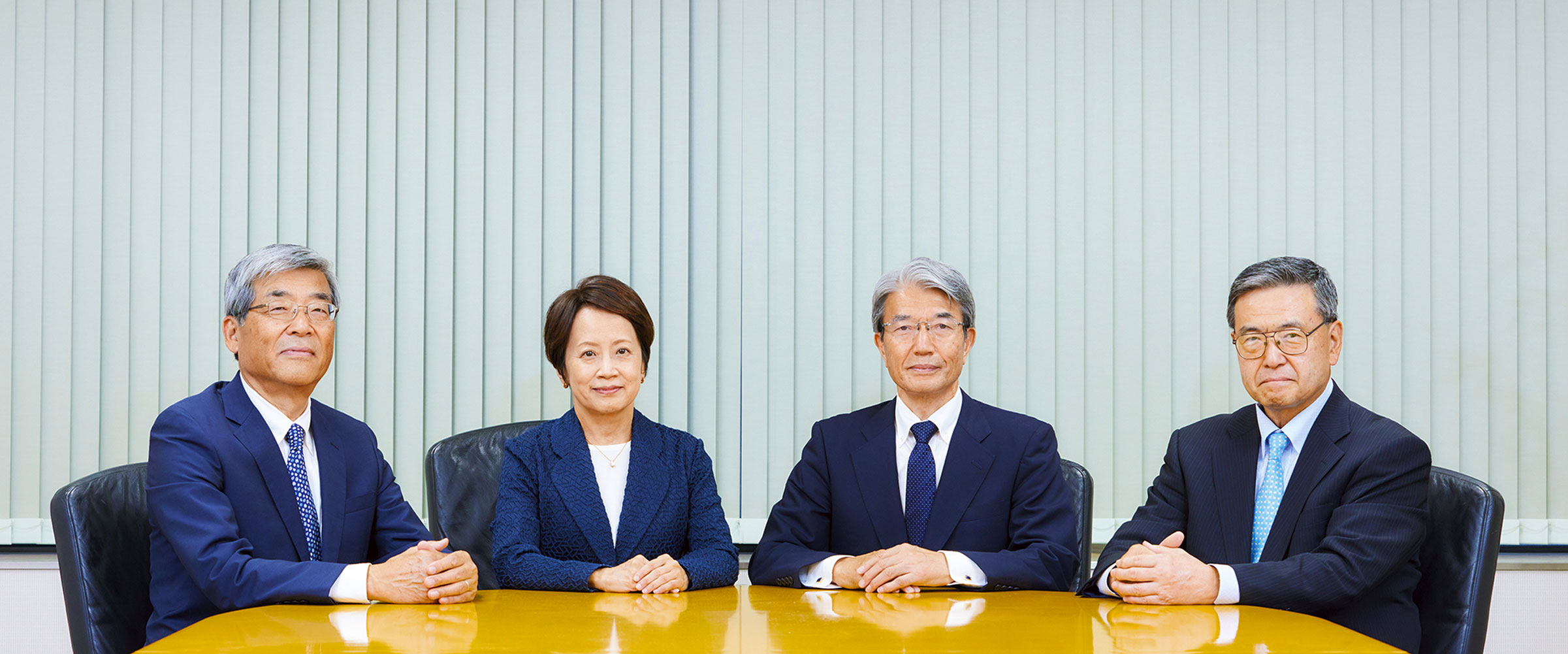
Round-Table Discussion With Outside Directors
Reaching the next stage toward becoming a resilient company:
recommendations from outside directors
Round-Table Discussion With Outside Directors
Reaching the next stage toward becoming a resilient company:
recommendations from outside directors
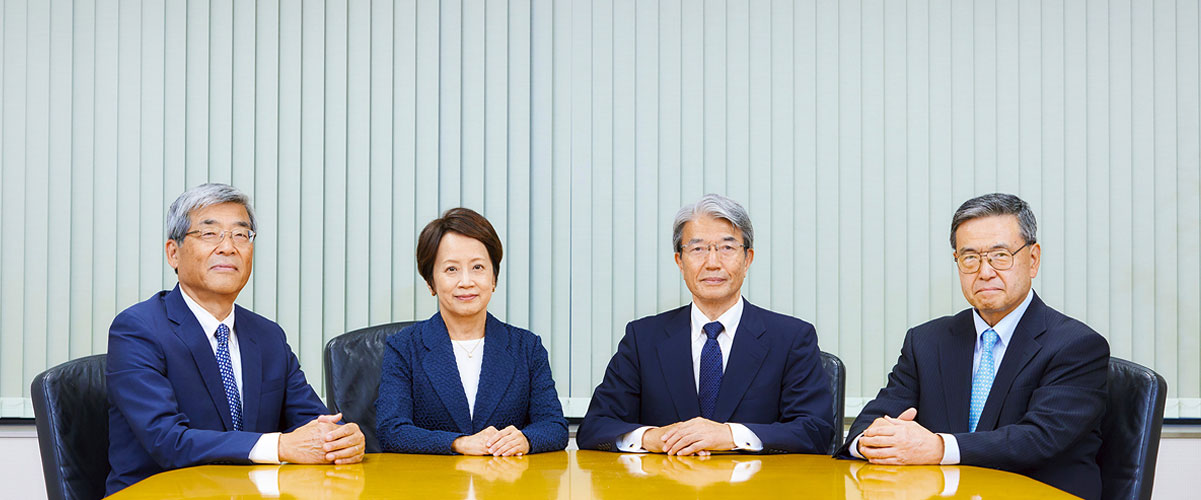
Moderated by Senior Managing Executive Officer Hiroshi Toyoda, four outside directors held a round-table discussion on issues aimed at improving corporate value over the medium to long term, such as the state of the Board of Directors and expectations for the next Medium-Term Management Plan.
A year of emerging issues for growth, despite achieving profit targets
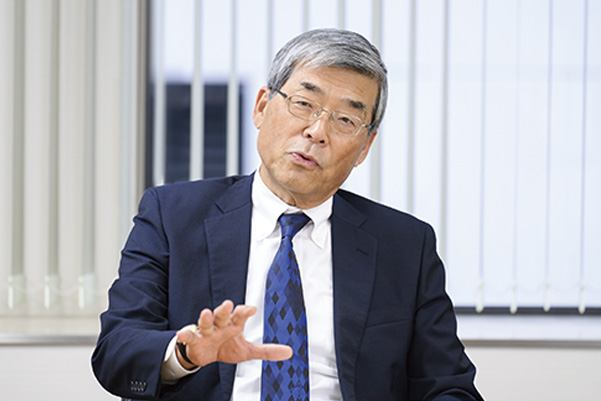 Outside Director Kenji Tani
ToyodaI would like to go around and hear everyone’s overall view on the Company’s management in FY2025.
TaniWhile I commend the Company for exceeding its profit target in the second year of the current Medium-Term Management Plan and for carrying out shareholder dividends and other intended measures as planned, I am concerned about the current state of the Company, where performance has declined from its peak in the final year of the previous Medium-Term Management Plan. It feels as if a reexamination is necessary of the cost structure and sales portfolio. Following the electric arc furnace, the Company has made other large-scale investments, including a new cold rolling mill with a total investment of 11 billion yen. However, it is important to first stabilize operations adapted to this new equipment to ensure steady results and secure cost competitiveness. From this perspective, I intend to closely monitor the progress and results in this area.
SugaThough studies are underway about shifting to a more profitable sales portfolio, I feel this has not produced results yet. In order to expand the scale of the Company’s business and product variation, partnering with other companies may be worth considering. In any case, the Company needs to find its strengths in this area to be competitive while assessing its position in the industry.
EtoMy impression of FY2025 is that
the Company was faced with a
challenging environment and focused
on short-term actions to handle this.
Although the business environment is
expected to remain uncertain in
FY2026, I hope the Company will not
only secure profits on the immediate
term, but also firmly implement
measures for medium- to long-term
business growth as set forth in the
Medium-Term Management Plan.
OgawaThe Company has a mission to supply products as one of few stainless steel producers in Japan, and is expected to sustain its business operations. However, the Company’s environment is in a state of great flux and uncertainty. I believe that it is time to discuss from multiple angles what to focus on and what the Company’s strengths will be in the future, rather than continuing with business as usual. To this end, I believe it is also vital to look into new collaborative frameworks for growth, while deepening trust on a global level with companies and the public sector that have different functions from the Company’s.
ToyodaYou are correct that the current Medium-Term Management Plan is on target in terms of profitability, but that challenges remain in the cost structure and business portfolio. On the other hand, the financial foundation is steadily improving. We on the executive side of the business, including the Corporate Planning Department, recognize that the question of how we make the final year of the current Medium-Term Management Plan a launchpad to formulating the next Medium-Term Management Plan is a significant task for us.
TaniThe environment in the
stainless steel industry is changing
dramatically, especially with
restructuring on the production side.
Amid these changes, I think there is a
need to reassess the Company’s
current position and establish an
accurate awareness of exactly how
much capability, including production
capacity, the Company actually has.
ToyodaThat is an important perspective. We have made major capital investments so far, including a hot rolling mill, an argon oxygen decarburization furnace, and a new electric arc furnace, which have been critical to the Company’s survival, and we are proud of our production facilities and manufacturing technology. However, it takes time to reap the benefits of such an investment. This is why I believe that evaluation and ongoing efforts from a long-term perspective are required.
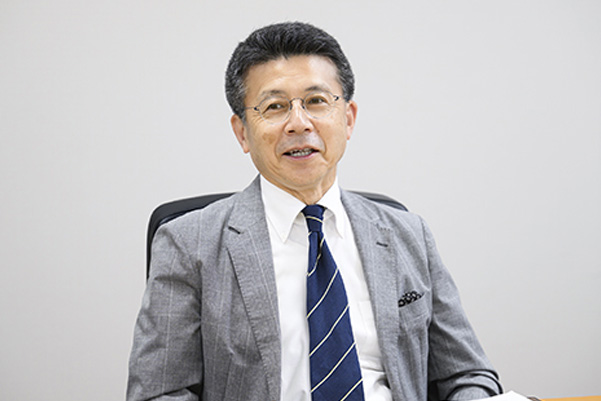 Outside Director Hiroshi Toyoda
Having deeper, more effective discussions from a medium- to long-term perspective
ToyodaTaking into account the issues we have discussed so far, how do you all see the ideal state of the Board of Directors going forward?
TaniWith the Company’s transition to a company with an Audit and Supervisory Committee, the structure is changing to one where a great deal of execution-side authority is delegated to certain directors. In light of these changes to the governance structure, I hope to build a Board of Directors that can engage in dense discussions on strategies and measures to enhance corporate value over the medium to long term, as well as human capital initiatives, including succession planning.
SugaI think it is essential to have a clear focus and robust discussions outside of Board meetings in order for the Company’s corporate strategy to be successful. Regarding the operation of the Board of Directors, it is desirable for members to be able to bring their own ideas to meetings and have effective discussions on matters that will develop in the future.
EtoThe Company must present a
growth path that will instill a sense of
expectation and interest in investors
that corporate growth is ahead.
Recently, the Company has enhanced
its investor relations and public
relations activities, and investors’
expectations have become more clearly
understood. Based on feedback
received, I expect that if the Board of
Directors can discuss the Company’s medium- to long-term growth strategy,
and if those from the executive side
can formulate a concrete plan and
clearly communicate it to investors, it
will lead to an improvement in the
share price.
TaniTo enable this kind of discussion, it is also necessary to seek out why it is important to modify the Company’s institutional design. Just modifying the system or changing the number of directors has no meaning if you intend to improve the Board of Directors. I feel it is critical to make it clear why this is changing, and what the purpose is.
OgawaI feel that the Board of Directors has an open and welcoming atmosphere where people feel comfortable speaking up. As for the substance of the discussion, I feel there is room for more lively discussions, but everyone has been very sincere in their responses, and I am encouraged by that. In order to deepen discussions going forward, I feel that in addition to narrowing the focus, it is also necessary to share awareness of issues on a daily basis.
EtoI think there is great openness in this regard, as the Company’s training for outside officers includes plant tours, pre-Board meeting presentations, and open discussions.
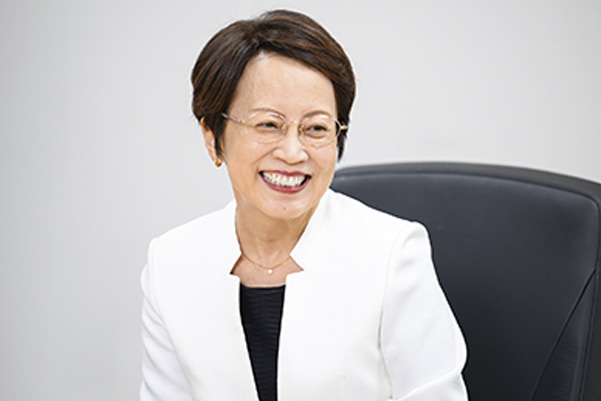 Outside Director Naomi Eto
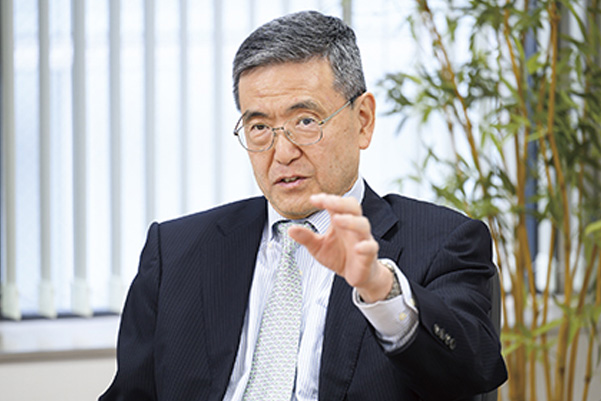 Outside Director Taizo Suga
Strategically managing our takeover response policy
ToyodaIn conjunction with the discussion on our current takeover response policy, we must, in essence, discuss how we can improve corporate value. To this end, we intend to continue to hold effective discussions at Board of Directors meetings.
EtoAs I said last year, I believe the significance of the Company’s policy responding to takeovers is to prepare shareholders with the information and time necessary to make a rational decision. Therefore, I believe that the Company’s current response is reasonable to a certain extent, but it is necessary to discuss what kind of response would be preferable in light of social trends and other factors before June 2026, when the preemptive takeover defense measures expire. In principle, if a company receives a takeover offer, it should calmly assess the details of the proposal and consider its merits and potential. If this results in a strong desire not to be acquired, then the company must present a convincing growth narrative of its own to shareholders.
TaniI do not disagree with the position that the current policy for dealing with takeovers has a certain rationale. However, the Company must take seriously the reality that in the current market environment, it is becoming less and less acceptable to have anti-takeover measures in times of normalcy. It is very likely that only a contingency-based anti-takeover policy will be able to convincingly answer the question of whether there is really any basis for resisting such a reality. The Company must be prepared to establish a system in this direction going forward.
SugaI too feel that this kind of
peacetime anti-takeover policy is no
longer appropriate for the current
situation. The important thing is to
take the time to explain the situation in
detail and to make the final decision at
the general meeting of shareholders.
On the other hand, there will be
situations where it must be determined
whether the proposing party’s
acquisition has the Company’s growth
in mind as well. In this context, it is
important to establish a posture that
enables shareholders to understand
the situation, determine that the
Company has made a reasonable
proposal, and agree with the Company
in the event of a contingency.
OgawaThe Company must continue to seriously consider a takeover as a real possibility. It does not have to be passive about this and should not limit itself to reactionary measures. Rather, in discussions about the new Medium-Term Management Plan, we should proactively consider what should be done from a strategic perspective, including takeover risk.
TaniIt is also important to look at how a takeover would change the Company and whom such a takeover would make happy. To put it differently, I believe that in some cases, a takeover can be a desirable decision for all stakeholders if the proposing party can present a clear vision for improving corporate value and can be trusted to execute it.
ToyodaIt is true that the Company
has a history of riding out the storms
of industry restructuring and, in light
of recent activist trends, takeovers do
not tend to be viewed positively.
I believe that by understanding the
Company’s history and calmly
accepting outside opinions, we can
move forward in a constructive
direction by discussing how to handle
the situation. In order to draw up an
equity story for enhancing our
corporate value, we would like to
strategically position and address the
nature of our takeover response policy
in discussions about our new
Medium-Term Management Plan.
From defense to offense: A stronger corporate structure helps to reach the next stage
ToyodaFinally, what are your thoughts on the next Medium-Term Management Plan, for which discussions are about to begin?
TaniAt the risk of repeating myself,
it is extremely important that the
Company first builds and maintains an
efficient and cost-competitive
production system so that the
strategic investments it has made over
the past few years will bear fruit.
Based on this, I believe that in the
next Medium-Term Management Plan, the Company should shift to an
aggressive management approach to
more proactively attain growth.
SugaI believe it is important to aim
for quantitative growth as well,
founded in improving the Company’s
own productivity and
competitiveness, while also being
aware of the movements of
competitors in Japan and abroad.
What the Company will need for this
growth is human resource capabilities.
In addition to acquiring talent who
can dynamically ideate and execute, it
is also important to bring in leaders at
the department general manager level
who can steer projects forward. A
more agile structure is needed for the
Company to reach the next phase.
EtoHuman resources are not something that will produce results immediately on recruitment; however, securing and cultivating these resources, including at manufacturing bases, is an important foundation for future growth. I hope that the Company will take these points into consideration and address its human resource strategy with a greater sense of urgency.
ToyodaIt is a key theme that we build an environment empowering diverse human resources, including those in the field. How can we maintain high labor productivity amid limits on working hours due to overtime regulations and other factors? In addition, as we expand overseas, how do we go about hiring and training talent overseas? I believe that such issues need to be firmly incorporated into the next Medium-Term Management Plan.
OgawaFor example, when considering growth in the Indian market, it will be important to work with new local partners as well as existing colleagues. I look forward to further discussions on measures to enhance communication and other elements that will be necessary in this process.
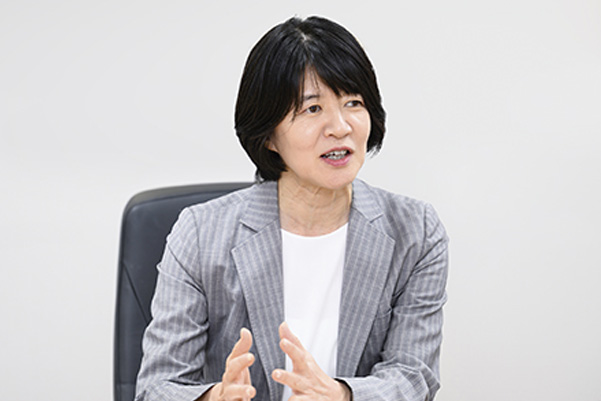 Outside Director Mariko Ogawa
TaniIt is important for the younger generation to be in a company where they can expect future growth and the excitement of taking on new challenges. Such a corporate culture will not be achieved unless each and every one of us acts with the desire to create such a company. Messaging from top management is also important. The announcement of the new Medium-Term Management Plan is an excellent time for the president to set a new direction.
EtoPresident Urata is an expert in overseas sales and has a strong awareness of issues related to governance and human resource development. As this will be his first formulation of Medium-Term Management Plan as president, I would like him to capitalize on his perspective and lead by example at the forefront.
ToyodaToward the formulation of the next Medium-Term Management Plan, the Corporate Planning Department is currently conducting interviews with each division, which has completed as of early August. The next Medium-Term Management Plan will reflect the president’s thoughts to the fullest extent, and as you have pointed out, the plan is not about backward-looking stability, but about pioneering a new future and increasing corporate value. In this sense, our first priority is to be resilient (flexible and strong), and we intend to draw up a flexible and powerful growth strategy that is not bound solely by the movements of the external environment. Thank you very much for your time today.
Outside Director Kenji Tani
Outside Director Naomi Eto
Outside Director Taizo Suga
Outside Director Mariko Ogawa
Outside Director Hiroshi Toyoda